Category Archives: Fish
Buy a fish, save a tree?
Wild-caught pets are often recommended against, since the harvest of wild caught specimen may deplete wild populations. In the Brazilian rainforest, the harvesting of popular aquarium species such as cardinal tetras have however helped prevent deforestation and made it possible for local residents to earn a living without resorting to logging, mining, cattle ranching, and slash-and-burn agriculture.
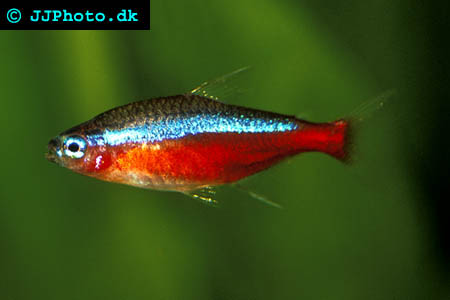
“All this is very counter-intuitive,” says Scott Dowd, an Amazon biologist at the New England Aquarium who has been researching the dark acidic waters of Rio Negro, a major Amazon tributary in Northern Brazil, for the past two decades. “You would think biologists would not want to take fish out of the rainforest. But the fish are the key to miminizing deforestation. The people’s other economic options – timber harvest, cattle ranching and gold mining – are environmental disasters.”
The Rio Negro region has been a major fish exporter for over half a century and 60 percent of local populations rely in this source of income for their sustenance. Since deforestation is known to be detrimental to the survival of financially valuable fish species like the cardinal tetra fish, the Brazilian government has protected the Rio Negro rainforest from logging and burning – at least until now. The situation may be about to change dramatically as more and more aquarium shops switch from wild-caught fish to farm-raised specimens. Wild-caught specimens are used to the dark, soft and highly acidic water conditions of Rio Negro, while farm-raised fish tend to be acclimatized to common tap-water conditions (i.e. clear water that is not very soft or acidic) and therefore easier to keep.
To prevent the market for wild-caught Rio Negro fish from collapsing, Dowd is participating in a “Buy a Fish, Save a Tree” campaign. “The local fisheries look like they are headed for collapse”, Down explains. “But there’s hope that this threat can be addressed. If you ask fish hobbyists if they care about the environment, a very high percentage say they care about it deeply.”
Dowd hopes that the “Buy a Fish, Save a Tree” branding will help Brazilian fish harvesters to benefit from the growing trend of cause labelling, such as Fair Trade and FSC (Forest Stewardship Council).
Another important step in making wild-caught Rio Negro fish a popular alternative to farmed-raised specimens is to adapt them to normal aquarium conditions, and the New England Aquarium is therefore helping local fishermen to efficiently acclimatize wild-caught tetras to a pH-value around 7.0.
Dowd also hope to take advantage of the Internet, by assigning lot numbers to every batch of aquarium fish caught in Rio Negro. “Imagine if you could go online and see a video of the actual fisherman who caught your tropical fish, says Dowd. “I want hobbyists to know directly how their choices can affect people thousands of miles away and how they can make a contribution to saving the rainforest. Things don’t look good, but we can begin to turn all of this around.”
Multi-million dollar marine life contraband ring busted by the Florida Fish and Wildlife Commission
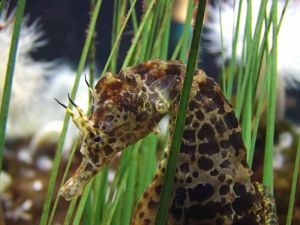
A six-month long investigation by the Florida Fish and Wildlife Commission (FWC) has led to the arrest of seven adults and one juvenile in Tampa. The arrested persons are believed to have been involved in various illegal activates concerning marine life, including catching protected sharks, sea horses, peppermint shrimp and bay scallops in Floridian waters, and exporting illegally obtained marine life to Europe. They are also suspected of having sold bait fish and bait shrimp as food for human consumption.
According to the FWC, the ring is believed to have operated for at least five years before attracting the attention of FWC. The ring lost a lot of animals due to poor maintenance, but the FWC still believes the group managed to sell $600,000 worth of peppermint shrimp alone.
The Florida Fish and Wildlife Conservation Commission came into existence on July 1, 1999. The Investigations Section of the commission conducts both overt (uniform) and covert (plainclothes) investigations, and one of their tasks is to target hard-core commercial violators by conducting long-term undercover investigations. In 2003, the Investigations Section made 554 arrests/warnings and seized 130 illegally possessed specimens of fish and wildlife including a cougar, tigers, leopards, primates, exotic deer, venomous reptiles, protected birds and exotic aquatic species.
Dams make no damn difference to salmon survival – or do they?
A study published in the online scientific journal PLoS Biology on October 27 with the provocative headline “Dams make no damn difference to salmon survival”[1] is now being questioned by a number of scientists, including several co-authors of the study.
According to the study, young fish running the gantlet of dams on the Snake and Columbia rivers did just as well as youngsters in an undammed river. Dams are widely regarded as one of the main reasons behind the sharp decline of salmon in North America’s western rivers and a study claiming that dams make no damn difference for salmon survival is therefore destined to receive a lot of attention from dam proponents and dam critics alike.
While a number of scientists, including several co-authors, are questioning the results and cautioning about what conclusions can really be drawn from them, lead-author David Welch stands by his report. “We’re not saying that the dams have never had an effect,” says Welch. “What we all have to ask ourselves is, if survival is up to the level of a river that doesn’t have dams, then what’s causing survival problems?”
Welch has already warned against overstating what the study proves, and continues to do so. According to Welch, the results of the study do however suggest that dams might not play such a big role in the fate of endangered Columbia River salmon today, and that the situation in the ocean – where the salmon live until it migrates upstream to spawn – is of higher importance than river conditions.

Michele DeHart, manager of the Fish Passage Center[2], strongly disagree with the conclusions drawn from the study. “There’s a huge mass of scientific literature that documents the impacts of dams. It’s just huge,” says DeHart. “It’s like saying, ‘Gosh, I just did this comparison and smoking does not cause cancer.’ Would you change your mind?”
In the study, the survival rate of young salmon and steelhead heading for the ocean (so called smolts) was measured in the rivers Columbia and Snake, which are heavily dammed, and in Fraser River, which has no dams at all. To the researchers’ surprise, the recorded survival rate was around 25 percent for all smolts, regardless of whether they travelled in dammed or undammed waters. If you take into account that smolt in the Columbia River actually have to travel a longer distance, it even looks as if smolt traversing dammed waters are doing better than their counterparts in the undammed Fraser.
Environmental groups are now claiming that comparing the different rivers with each other is like comparing apples and oranges, and co-author Carl Schreck, head of the Oregon Cooperative Fish and Wildlife Research Unit at Oregon State University, warns that the study could have failed to account for fish that die in the ocean due to the stress they have been subjected to while traversing dams in Columbia and Snake.
Ed Bowles, biologist and head of fisheries for the Oregon Department of Fish and Wildlife, says that it would be better to compare how similar fish, e.g. spring Chinook, do when they spawn in the same river – some above dams and some below.
[1] The authors of the study weren’t the ones who came up with the provocative “no damn difference”-heading. After lead author Welch found out about the headline, PLoS Biology withdrew its news release and issued a new one where the provocative headline had been removed.
[2] The Fish Passage Center is a government-funded agency that tracks and studies Columbia River fish.
Two new West African catfish species
New species of catfish from the Ngounié River
Belgian and French scientist[1] have now described and named an African catfish sporting a striking pattern of irregular whitish lines and dots over a black background. The fish has been given the name Synodontis ngouniensis after its type locality, the Ngounié River drainage. The Ngounie River is the last and second most important tributary of the famous Ogowe River and flows through the country Gabon in west central Africa. The species can also be found in the Nyanga River drainage in Congo. (Nyanga is a smaller coastal river that runs through southern Gabon and northern Congo.)
The researchers collected Synodontis ngouniensis from a turbid part of the Ngounié River, where the temperature was 24°C (roughly 75°F) and the pH-value 8.4 (very alkaline).
Synodontis ngouniensis is a mochokid catfish. Its dorsal spine has a smooth anterior margin except for 1-4 feeble serrations that can be seen on the distal part. The species also has a maxillary barbel with a smooth membrane which is proximally at least as broad as the barbel thread and located on the posterior basal two third of the barbel. The fish is equipped with 12-19 mandibular teeth, 10-13 gill rakers on the ceratobranchial of the first branchial arch, and a triangular humeral process.
If you want to learn more, you can find the description of the fish in Ichthyological Exploration of Freshwaters 19[2].
New species of catfish from the Woleu River
This new species of mochokid catfish has long been confused with another similar species, Synodontis batesii, but has now been recognized as a species in its own right thanks to the work of researchers John Friel and John Sullivan. The new species has been given the name Synodontis woleuensis after the river Woleu and has is known to be present in the Woleu/Mbini/Uoro and Ntem basins of Gabon and Equatorial Guinea in west central Africa.
Synodontis woleuensis sports a dark background colour decorated with numerous small light spots of irregular shapes. A pair of light spots can be seen anterior and posterior to the adipose fin, and a narrow depigmented curved band runs along the anterior margin of the caudal fin. Another notable feature is the serrations on the anterior edge of the dorsal spine of the fish.
If you wish to learn more about this new species, you can find the description in the latest issue of Proceedings of the Academy of Natural Sciences of Philadelphia[3].
[1] Yves Fermon, Emmanuel Vreven, and David De Weirdt
[2] De Weirdt, D, E Vreven and Y Fermon (2008) Synodontis ngouniensis, new species (Siluriformes: Mochokidae) from the Ngounié and Nyanga basins, Gabon and Republic of Congo. Ichthyological Exploration of Freshwaters 19, pp. 121–128.
[3] Friel, JP & JP Sullivan (2008) Synodontis woleuensis (Siluriformes: Mochokidae), a new species of catfish from Gabon and Equatorial Guinea, Africa. Proceedings of the Academy of Natural Sciences of Philadelphia 157, pp. 3–12.
Some good news
I thought I would report on a few good news in the world of marine conservation. First of we are going to look at tuna fishing and the endangered Mediterranean Blue fin Tuna. The International Union for the Conservation of Nature (IUCN) an organization consisting of NGOs and governments surprisingly voted to cut tuna quotas in half (almost) in the Mediterranean as well as instituting a complete fishing ban during the spawning season in May and June when they meet at the World Conservation Congress in Barcelona. The surprising result came after Spain (an important fishing nation) and Japan (the key blue fin market) supported the restricted fishing to prevent the tuna population from collapsing. The IUCN Decision is not legally binding but puts a considerable amount of pressure on the International Commission for the Conservation of Atlantic Tunas (ICCAT) which will decide the future of tuna fishing for the coming years at a meeting in December. The effects of diminished quotas remain to be seen as a rapport from the WWF earlier this month showed that half all tuna caught in Italy was caught illegally and that illegal fishing was rampant in Italy.
I am going to leave tuna and talk about something completely different, Beluga whales. The US government this week listed the Beluga whales of Alaska’s Cook Inlet as an endangered species / population. The decision means much stricter rules about what can and can’t be done in the area and local authorities need to get the permission of the National Marine Fisheries Service before they can approve a number of activities in the area. Governor and GOP vice president candidate Sara Palin is worried that the decision will prevent economic growth in the area. She fears that the decision among other things will prevent the expansion of the harbor. The population declined nearly 50 percent between 1994 and 1998 and has not yet recovered. This is believed to be due to developments in the area, predation from killer whales and frequent whale strandings. Environmentalists hope that the new found protection will help increase the population again.

Beluga whale
Half of the tuna caught last year in the Mediterranean was illegal
The International Commission for the Conservation of Atlantic Tunas (ICCAT) estimates that 51 percent of all the Bluefin tuna caught in the Mediterranean during 2007 was illegal and unauthorised. According to the commission, the total catch for last year was 61,000 tones – a sharp contrast to the agreed quota of 29,500 tones. The commission is now warning for a complete collapse of the tune stocks in the Mediterranean, unless drastic measures are put into action.
According to the commission, the recovery plan implemented over the past two years by tuna fishing countries has failed to improve the poor state of the tuna stocks. If the Mediterranean tuna stocks collapse, it will not only be a catastrophe from a conservational perspective; it will also have serious consequences for all those who get their livelihood from tuna fishing in the area.
“Scientists have made the situation clear and now it is necessary for ICCAT and all the states involved in blue fin tuna exploitation to act in order to halt the decline and prevent a collapse“, says Xavier Pastor, the director of Oceana, an organisation that works to protect the world’s oceans. “Drastic measures should be adopted, such as closing the Mediterranean tuna fishery from June to August, the blue fin tuna’s reproductive months.”
Is a monster mutant fish attacking and eating humans in India??
For many years, residents living along the Great Kali River at the border between India and Nepal have claimed that a mysterious underwater creature is catching and devouring humans who dare to venture into the river. The rumours have now been investigated by biologist Jeremy Wade, who says the perpetrator might be a Goonch catfish (Bagarius yarrelli).

Local residents says that the creature probably changed its diet to include freshly caught human flesh after getting used to eating the remains of partly burned corpses. In Hinduism, corpses are traditionally cremated in pyres as a as part of the funeral rite and the remains are often placed in a river.
“The locals have told me of a theory that this monster has grown extra large on a diet of partially burnt corpses,” says Wade. “It has perhaps got this taste for flesh by feasting on remains of funeral pyres. There will be a few freak individuals that grow bigger than the other ones and if you throw in extra food, they will grow even bigger.”
Last year, and 18-year-old Nepali was dragged into the river by a creature described as “an elongated pig”, but this was not the first attack. 10 years ago, a 17-year-old Nepali was pulled below the surface while bathing, and three months later the same thing happened to another young boy.
According to Wade, the goonch is a more feasible culprit than the crocodile. The largest scientifically measured Goonch was 200 cm long, which equals 6.6 feet, and this makes this species one of the biggest freshwater fishes on the planet.
Jeremy Wade is a biologist and TV presenter who investigated the Kali River-rumours for a TV documentary. You can find out more about him and his work here. (http://www.jeremywade.co.uk/about_jeremy_wade.html)
Wolffish may become first marine fish to receive endangered species protection in New England
Is the scary looking Atlantic Wolffish, Anarhichas lupus, on the brink of extinction? Today, The Conservation Law Foundation (CLF) and others filed a scientific petition with the federal government of the United States, seeking endangered species protection for this intimidating eel-like creature. If the petition is successful, the Atlantic Wolffish will be the first marine fish to receive endangered species protection in New England.

The Atlantic Wolffish, also known as the Seawolf, is primarily found in cold parts of the Atlantic, but can also be encountered in warmer locations, such as the north-western Mediterranean Sea and the Bay of Biscay. Along the North American coast, it is found as north as the Davis Strait between mid-western Greenland and Baffin Island, and as far south as New Jersey. It is however uncommon south of Cape Cod, New England. In order to survive the cold temperature of its northern habitat, the Atlantic Wolffish has developed a natural anti-freeze that prevents its body from freezing.
The CLF petition cites federal and independent scientific studies that show a dramatic decline of Atlantic Wolffish during the past two decades. According to federal statistics, commercial fishermen are now landing 95% less Atlantic Wolffish than in 1983. Back in the early 1980s, commercial fishermen landed about 1,200 metric tones of this fish per annum, which can be compared to the mere 64.7 metric tons of Atlantic Wolffish landed last year. The Atlantic Wolffish has also worried the scientific community by virtually disappearing from the scientific research trawls carried out twice a year off the coast of New England.
”Based on all available science, Atlantic wolffish are rapidly headed toward extinction in New England’s ocean waters,” said Peter Shelley , CLF Vice President and Senior Attorney. “The dramatic decline in wolffish is a troubling indication that while there is some good news about marine species like haddock and sea scallops that have been successfully restored, our ocean’s long term health continues to hang for other species by a precarious balance. Key species like the wolffish and endangered whales remain in serious jeopardy.”
The main threats against the Atlantic Wolffish are commercial fishing (including by-catch) and habitat degradation, with a major part of the habitat degradation being the result of commercial fishing since it is carried out using trawls and dredges. “Absent some action to reduce or eliminate the destruction of seafloor habitat in the few remaining areas of United States waters that harbor remnant populations of the Atlantic wolffish, it is probable that it will be faced with extinction in those waters in the near future,” says marine scientist and co-petitioner Dr Les Watling.
The Atlantic Wolffish is listed as a Species of Concern by the National Oceanic and Atmospheric Administration’s (NOAA) National Marine Fisheries Service (NMFS).
Fish filmed in the mysterious deep sea Haldal zone
A UK-Japan team equipped with remote-operated landers has now managed to film a shoal of Pseudoliparis amblystomopsis fish at a depth of 7.7 km (4.8 mi) in the Japan Trench, where the oceanic Pacific plate subducts beneath the continental Eurasian plate.
The deepest record for any fish – over 8 km / 5 mi – is held by the species Abyssobrotula galatheae, but this fish was never filmed or observed while it was alive; it was dredged from the bottom of the Puerto Rico Trench and already dead when it reached the surface.
The Pseudoliparis amblystomopsis film shows the fish darting around in the dark, scooping up shrimps. The shoal consists of no less than 17 specimens, with the largest ones being around 30 cm (12 in) in length.
“It was an honour to see these fish“, says Dr Alan Jamieson, Research Fellow at the University of Aberdeen, Scotland. “No-one has ever seen fish alive at these depths before – you just never know what you are going to see when you get down there.
The filming took place as a part of the Hadeep project; a collaboration between the Oceanlab at the University of Aberdeen and the Ocean Research Institute at the University of Tokyo. The aim of the project, which is funded by the Nippon Foundation and the Natural Environment Research Council, is to find out more about life in the very deepest parts of the world’s oceans.
Just like the unfortunate Abyssobrotula galatheae, deep sea fishes tend to be in a sad state when researchers examine them at the surface and this is one of the reasons why a film is such great news for anyone interested in learning more about what’s going on at these vast depts.
According to Professor Monty Priede, also from the University of Aberdeen, the team was surprised by the fish’s behaviour. “We certainly thought, deep down, fish would be relatively inactive, saving energy as much as possible, and so on,” says Priede. “But when you see the video, the fish are rushing around, feeding accurately, snapping at prey coming past.“
Oceanographers normally divide the deep sea into three different depth zones:
- The Bathyal, which is located between 1,000 and 3,000 m (3,000 and 10,000 ft)
- The Abyss, which is located between 3,000 and 6,000 m (10,000 and 20,000 ft)
- The Hadal, which is located between 6,000 and 11,000 m (20,000 and 36,000 ft)
The Hadeep project has been looking at the creatures inhabiting the Hadal zone, which consists of comparatively narrow trenches in the wide abyss. In this environment there is no light and the pressure is immense. The food supply is also very limited, since photosynthesising organisms can not survive and most other creatures stay away as well. The animals living in the Hadal zone must therefore rely on food sinking down to them from more fruitful waters above.
In order to cope with pressure, Hadal dwellers display numerous physiological modifications, primarily at the molecular level. They have also developed various ways of dealing with the constant night and Pseudoliparis amblystomopsis is for instance equipped with vibration receptors on its snout which comes in handy when the fish navigates through the darkness and searches for food.
Dr Alan Jamieson now hopes that the Japan-UK team will find more fish during their next expedition down into the Haldal zone, which is planned to take place in March 2009 and aims to venture as far down as 9,000 m (30,000 ft).”Nobody has really been able to look at these depths before – I think we will see some fish living much deeper,” says Jamieson, whose deep-sea blog from the expedition can be found at Planet Earth Online.
You can also read more about this story over at deep sea news, a great blog if you want to keep up to date on deep sea discoveries.
Murkiness causes species to interbreed out of existence in polluted Lake Victoria
The release of sediment and algae-boosting fertilizers into Lake Victoria can cause cichlid species to interbreed in the murky water, according to Ole Seehausen, evolutionary biologist at the University of Bern in Switzerland and the Swiss Federal Institute of Aquatic Science and Technology in Kastanienbaum.
In a recent article published in Nature, Seehausen and his colleagues are shedding some light on the question of how closely related species of cichlids living adjacent to each other in Lake Victoria manages to avoid interbreeding. According to Seehausen et al, species may develop and stay distinct because of how the members of each species see colours.
Seehausen and his research team have studied closely related species of Lake Victoria cichlids where the males are either blue or red. It has since long been known that females of these species prefer to mate with the male displaying the brightest colours, but the new research suggests that both sexes have evolved to preferentially see only red or blue. This means that if a brightly coloured red male swims by a blue-seeing female, she will not be able to appreciate his sexy brightness since see can not see the colour red.
“Reds and blues live in the exact same spot,” says Seehausen,. “Colour is very important in mate choice.”
In order to fully understand the role of vision in underwater evolution, we must be aware of how light acts when it penetrates the water. Blue colours shine much brighter than red ones in the shallows, while red pigmentation trumps blue as we proceed farther down. As you probably have guessed already, red cichlid species tend to be found near the surface in Lake Victoria, while the blue ones inhabit greater depths.
To learn more about what happens to cichlids in the transition between red and blue zones in the lake, Seehausen and his team studied species inhabiting the shores of five different islands. The cloudiness of the surrounding waters varies from island to island due to variations in sedimentation, giving the researchers a great opportunity to study the effects of varying water clearness.
In comparatively clear waters, the colour that appears brighter slowly and gradually changes from red to blue with depth. This makes each species stay within its own zone and prevents interbreeding. In more clouded waters, the change from red to blue occurs much more suddenly, causing a higher prevalence of interbreeding between closely related species of fish.
Further testing in laboratory aquariums showed that hybrid females, like the ones living in cloudy waters, did not favour red males over blue ones or the other way around. This distinguished them from non-hybrid females, since females belonging to a species with red-sensing eyes picked red males in the laboratory tanks while the blue-sensing females opted for blue beaus.
Seehausen is now worried that the unchecked release of sediment and algae-promoting fertilizers into Lake Victoria will cause more and more fish to interbreed, thereby greatly reducing the number of species in a lake famous for its astonishing biological diversity and degree of endemic species. “Species diversity in this lake has imploded in the last 30 years,” Seehausen says. “It is the largest human-witnessed mass extinction of vertebrates.“
You can read more in the article “Speciation through sensory drive in cichlid fish” by Seehausen et al. http://www.nature.com/nature/journal/v455/n7213/abs/nature07285.html