Category Archives: Environmental
Deaths Caused by BP Oil Disaster Tallied UP and Estimated
 The official Federal Government Website, “Restore the Gulf”, has released its latest report on the effects that the BP oil spill fiasco has had on the poor animals of the area.
The group has put together some rough numbers from eyes on the ground, including the U.S. Fish and Wildlife Service and the National Oceanic and Atmospheric Administration.
So, what exactly are the current numbers of dead as of the November 1st report?
The latest numbers are as follows: 6,104 deceased birds, 609 perished sea turtles, and 100 dead mammals, which include those lovable creatures, dolphins. The estimate is a count which tallies up the results from five different states: Alabama, Florida, Louisiana, Mississippi, and of course, Texas.
Now, we must take a moment here, and say that these were the deaths recorded in the area, and upon first glance. Not all of the aforementioned deaths were necessarily because of the huge mess BP made in the Gulf Of Mexico. The final COD, cause of death, is going to be determined later.
When specimens are discovered, or trapped, they get their own very special ID numbers. After the initial counting, a more thorough autopsy will take place to look for things like black goo in the throat, mouth and eyes, as well as a necropsy to see if BP’s big mess is indeed to blame.
The report released also shows the numbers of live animals and birds which were observed to have been alive and well, if a bit gooey and black. The numbers don’t look good for BP. Of 535 sea turtles collected, 456 were visibly covered in the black goo…
So, looks like BP is going to have some more explaining to do!
BP Sand Shark Still on the Hunt for Tar Balls, Is It Enough?
The contract crews from BP have marched onwards to Pensacola Beach, cleaning up tar balls by hand, however the national seashore’s supervisors were saving the heavy equipment until the Turtle and Bird mating season was over and done with, lest they disturb them even more than the spill itself did.
For the moment, scores of workers are removing and cleaning away tar balls with their bare hands. Morris commented that the crews are cleaning things away much more effectively now that the weather has cooled down and the laborors now have more experience in collecting the tar balls from the sand.
However, it is now time to stop messing around, and call in the big guns to get the mess cleared away. Jason Bragg, who is in charge of the machine removal of the tar balls from Panhandle beaches, has commented that while the Sand Shark isn’t a “rocket ship”, it is quite thorough, and removes all objects from the sand which are bigger than three millimeters – about the same size as the needles are across in a tattoo parlor.
This machine is eleven feet tall, weighs in at about 35 tons, has a top speed if two miles and hour and is manned by a skeleton crew of between six and ten people. In roughly one day – two ten hour shifts – the machine can clear away an area of sand which is eight feet wide and one and a half miles long. At this rate though, the beaches won’t be cleaned until late 2011 if then…
Case Study: BP Oil Spill Take Toll on Bluefin Tuna, Satellites Don’t Lie!
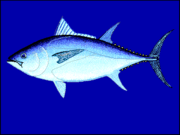 The BP oil spill fiasco of the Gulf Of Mexico couldn’t have come at a worse time for bluefin tuna: they had recently just made their way into the Gulf – where they generally went to try and mate – to get jiggy with it and make a bunch of little bluefin. Satellites have been keeping an eye on things, and have been a great asset in determining what damage has been done to the bluefin’s spawning grounds.
The amazing Atlantic bluefin tuna, some of the largest of this species of fish can be as large as a Volkswagon Beetle, make their way to the Gulf every year from January until June. The peak time when they spawn is about mid April to May – just as BP was giving out free samples of its precious oil, when the well they had exploded and started pumping thousands of gallons of crude into the area this past April 20th.
This fish, which is paramount to commercial markets everywhere, mate in the surface waters, the females lay their eggs and the males fertilize away behind them. The oil present could cause harm to the eggs, larva and even the adults in the area. To make matters worse, the Atlantic tuna populations of the world have seen a drastic decline of 82% over the past three decades, so it is extremely important that they be allowed to mate without interruption.
Well, great job BP.. You really did cause quite the disturbances… How would they like it if we dumped oil into their beds as they were getting in the mood?
Fisherman Gets Sent Up the River For Taking Shot at Sea Lion:

Sealion
A fisherman from Northern California who took out his frustrations on a sea lion last year, has just been sentenced this past Friday to one month in jail and to pay $51,000 in restitution.
Larry Allen Legans, the fisherman who decided to shoot the poor defenseless animal, was found guilty in a court of law os “intentionally maiming or wounding an animal”. Sgt. Nevis, the name given to the sea lion, was discovered back in November of 2009 with a life-threatening hole in his snout. It was such a bad wound that the sea lion couldn’t even put his head under the water. Luckily for Sgt. Nevis, there were marine veterinarians volunteers available to help take care of him.
Not only does Legans have to spend time in lock-up, he also has to pay restitution to the Marine Mammal Center in Sausalito. This is to cover the costs of the medical bills, and also to help repay damages done to the animal.
The sea lion, which was named after the person who rescued him, recently underwent a successful reconstructive surgery this past week to help repair the huge hole in his snout. Once he has fully recovered he will become a permanent resident at Seal Cove in Six Flags Discovery Kingdom in Vallejo.
It is still unknown at this time just why the poor guy was shot in the first place, and Legans hasn’t shed any light on the subject, and is not likely to anytime in the foreseeable future.
Marine Lab in Florida Releasing Coral Fragments to Help Restock Reef in Keys
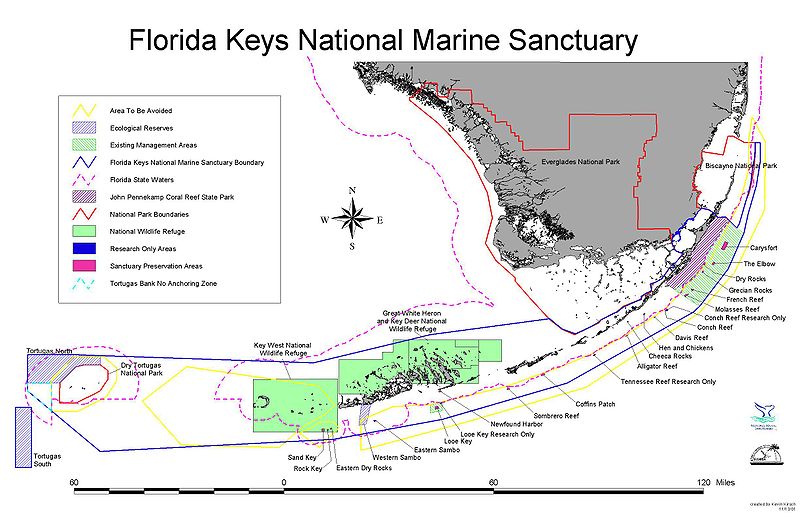
Florida Keys National Marine Sanctuary
This past Wednesday, researchers at the Mote Marine Laboratory released four different kinds of coral at two different locations in the Florida Keys National Marine Sanctuary. This action, which was sanctioned by the Sanctuary officials and the Florida Fish and Wildlife Conservation Commission, is supposed to help try out the practicality of using “test tibe” coral to restock the damaged or depleted reefs of the world.
One of the sites chosen for this momentous test, Mote, is utilizing coral grown in a local nursery to try and replenish stocks of stagorn coral. The second location was decided upon because it seemed to be especially hard done by with the cold snap running through, which caused a coildwater bleaching even this past January.
“Now is an especially good time to do this study because of the cold snap in January,” explained director of Mote’s Center for Aquaculture Research and Development, Dr. Kevan Main. The MCARD reared the coral fragments in partnership with Mote’s Center for Coral Reef Research at Mote’s Tropical Research Laboratory on Summerland Key. “During that cold event, many of the fragmented corals growing at the inshore release site were lost. This gives us an opportunity to see whether we can jump start the recovery of corals at this site with cultured fragments.”
Its good to see that some progress has been made to help the world get its reefs back in tip top form. As we all know, coral reefs are a vital part to the well being of the world’s oceans, and if they go, soon all life in the sea will go.. And we know where that leads….
USF Scientists: Ultraviolet Diagnostics show “Contaminated” Beach
A scientists with the University of South Florida Coastal Research Lab just recently took a gander at the Walton County beaches using a UV light and has commented they are “still contaminated” following the BP oil spill fiasco in the Gulf of Mexico.
A graduate student, Rip kirby, took a high-powered UV light over one length of the beach, and the light showed bits and areas all over the place of what he calls “accumulation of petroleum product and dispersant.” He issued a public apology for not getting around to taking the samples at an earlier date.
“This beach is just as contaminated as the rest, I’m sorry,” Kirby commenting, he added, “I took the local government officials’ word that these beaches were not impacted and stopped my testing in Destin.”
Joe Preston, the driector of Walton County Emergency Operations, saw fit to not return any of a multitude of calls from the papers. Cecilia Jones and Scott Brannon, Walton County Commissioners, also did not see fit to return calls. The Sheriff’s Office, surprise surprise, was also not attending to any questions on the matter.
Kirby, who dwells in the Fort Walton Beach area, and his team of colleagues from the USF have been digging deeper into the effects the spill has had on the local environment, and their findings were published in National Geographic this past July. However, the beaches were worse for wear, and Kirby stopped investigation because the officials said everything was fine..
So, who is trying to cover up for who here? What sort of scandal awaits? Only time will tell.. That is, if people see fit to answer their phones…
Something Fishy Going On With Massive Fish Death
A massive amount of fish have been killed off in the Bayou Chaland area of Plaquemines Parish, Louisiana and something stinks. Plaquemines is the southernmost parish of Louisiana, where they are just now starting to get back on their feet after the BP oil spill fiasco. Among the fish that have been mysteriously turning up dead are pogie, redfish, shrimp, crabs, and even freshwater eels have not been able to escape the clammy grasp of death.
The Louisiana Department of Wildlife and Fisheries released a statement the day after the fish started turning up dead stating that the cause of death for the fish was low levels of oxygen, and was not related to to the BP oil Spill fiasco.
The director of the Coastal Zone Management Department, P.J. Hahn, has pointed out that the Louisiana Department of Wildlife and Fisheries came to the conclusion without bothering to take any water samples, or fish samples in the affected area. This is where things get fishy. If you are testing things, and I’m no scientist, but you need to take samples, otherwise what are you basing your data on? The commentary of some dead fish?
P.J. Had this to say on the matter “ We had three fish kills in eight days, all in areas that were heavily oiled during the Deep Horizon Oil spill. The first was in Chaland Pass, the second near Bay Joe Wise and the third was in Bay Robinson. All kills covered areas approximately two square miles in size. I collected water and fish samples and turned them over to our DA’s office. Early independent testing results show the fish have oil in their gills and liver. Now a more detailed testing will indicate the fingerprint of the oil to see if it matches the BP Deep Horizons oil.”
Uh Oh.. Data Manipulation anyone? Conspiracy? Will BP now have one more nail in their coffin and be sent to sleep with the fishes?
¨Hunters Becoming the Hunted: Lionfish Role Reversal!
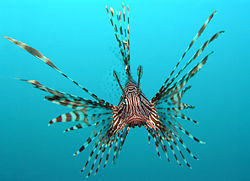
Lionfish photo by Jens Petersen
The Ministry of Agriculture and Fisheries in Jamaica is taking some drastic measures to help prevent the collapse of the marine fisheries. They are now promoting lionfish as being a tasty treat for any menu. This effort is to help control the explosive growth of the lionfish population.
Officials have said that the nation’s marine biodiversity, its food security and economic well-being are all at risk.
“The situation in Jamaica is urgent,” commented the national coordinator for the Jamaican component of a Caribbean-wide Invasive Alien Species Project at the National Environment and Planning Agency, Nelsa English.
“A lack of sufficient natural predators suggests that it (lionfish) could be a potentially significant threat to Jamaica’s biodiversity and the ecosystem in general,” she added.
The marine resources of Jamaica are stretched dangerously thin, its reefs are being exploited to the point of extinction, and the fishing practices being used are detrimental to the environment. Some people even go as far as to use explosives to bring up their fish! Those that don’t often use toxic chemicals and nets whose mesh is illegally small.
Researchers have agreed that many of the once majestic reefs have been decimated to becoming mere communities of coral, and no longer operate as complete ecosystems due to the lack of diversity that calls them home.
Well seems to me that lionfish are part of the problem, and Jamaica has the answer. They are following suit as other nations are frying them up, putting them in sandwiches or using them as a pizza topping.
The Algae Which are Bent on World Domination?
An Israeli Ph.D student’s case study on a kind of deadly algae, may just help to make drinking water safer for people and animals alike.
It almost sounds like a zany plot from a cartoon from a super villain: A beautiful, yet very deadly, kind of blue-green algae, forces other microorganisms found in fresh water to do its bidding, which enables them to over run the water, and threaten the health of people and animals all over the world.
These devious cyanobacteria algae – known as the thorns in the sides of the freshwater populaces – are not cartoon characters however. A paper recently published on August the 12th in the journal Current Biology, a scientist over at the Hebrew University of Jerusalem explains to us how they take over their competition and are very prolific, raising concern around the world due to the detrimental impact they could pose on the quality of water.
By enlightening us on how the algae function, Yehonatan Bar-Yosef’s case study can help other experts find out how to deal with this threat and ensure that drinking water is safe for humans and animals all over the world.
Back in 1994, a huge bloom of this toxic algae was discovered in Lake Kinneret, which is also known as the Sea of Galilee. A lot of the potable water for Israel is taken from the Kinneret, so this discovery really raised red flags.
Luckily for us Bar-Yosef is delving into the matter, and could conceivably come up with an enzyme to help battle this dastardly algae.
Good luck Bar-Yosef, we are all rooting for you. Hopefully he will crack the code, and help everyone in the world.
Russian Scallops to Keep Eye On Pollution

Scallop
A huge garden of sea scallops will be completed by the end of the month in the Far East Kozmino Bay in Russia. This will be the first time in the history of Russia, and possibly the world, where mollusks will be used as an instrument to monitor the water.
“Scallops are a very good measure of water pollution because they are very sensitive to contaminants. They absorb and retain impurities” explains the organic chemist at the helm of Kozmino’s ecological safety department, Natalia Vykhodtseva.
She continued by commenting that sea scallops are rather adept at filtering out different contaminants, especially oil and heavy metals, and this is the reason they are being used to monitor the health of the bay.
“If the monitoring is successful, we have an idea to create large permanent colonies for scallops, mussels and seaweed at the bottom of the bay and use them to filter the water and keep it clean,” added Vykhodtseva.
This “Sea Scallop Garden” is the brain child of the Russian oil company Transneft. It’s nice to sea that the oil companies are taking an interest, and becoming part of the solution rather than continuing to be part of the problem.
Of course, the reason for Transneft’s concern is the fact that it plans to heavily traffic the area, to the tune of 200 million barrels of oil, so of course people are concerned about pollution.
This is the first time an oil company has showed any concern, but then, they don’t really have a choice, ever since the BP oil fiasco, and the other spills over the past years…